
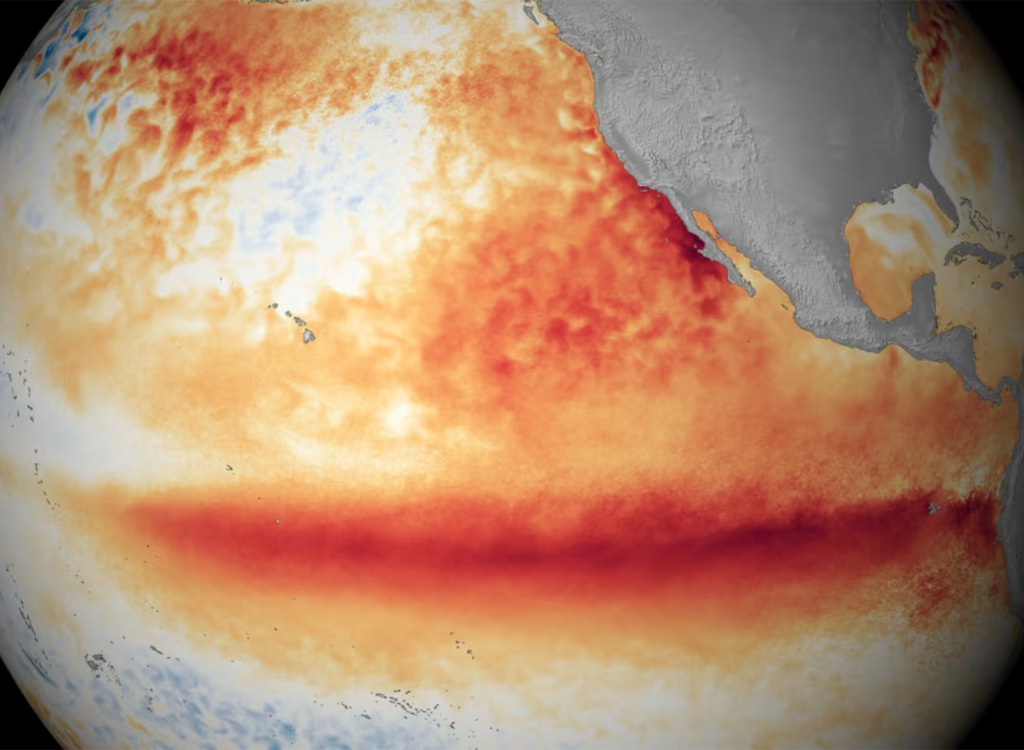
Meteorologists around the world are warning that a powerful El Niño climate pattern developing across the Pacific Ocean could dramatically alter global weather conditions throughout 2026, raising concerns over floods, droughts, heatwaves, food security, and economic disruption across multiple continents.
Scientists monitoring ocean temperatures say warming waters in the central and eastern Pacific have intensified rapidly in recent months, signaling the likely arrival of one of the strongest El Niño events in recent years. Climate agencies in the United States, Asia, and Australia have already begun issuing early forecasts predicting widespread environmental and economic consequences.
El Niño is a naturally occurring climate phenomenon caused by unusually warm sea surface temperatures in the Pacific Ocean. Although it originates thousands of kilometers away from South Asia, its effects are felt globally, influencing rainfall patterns, monsoons, hurricanes, agriculture, and temperatures around the world.
Long-term global warming
Experts say the 2026 event could prove especially disruptive because it is occurring alongside long-term global warming trends, which are already pushing temperatures to record levels.
“This is not simply another seasonal climate fluctuation,” said several international climate analysts in recent briefings. “When a strong El Niño combines with human-driven climate change, the impacts become more severe and less predictable.”
Countries in South Asia, including Sri Lanka and India, are expected to experience unstable monsoon conditions. Climate researchers warn that rainfall could become increasingly erratic, bringing prolonged dry periods followed by sudden heavy downpours and flooding.
For Sri Lanka, the threat is particularly significant.
The island nation remains heavily dependent on seasonal rainfall for agriculture, hydropower generation, and drinking water supplies. Tea cultivation, rice farming, and vegetable production could all face disruption if rainfall patterns become unpredictable. Agricultural experts fear that reduced harvests may increase food prices and place additional strain on households already dealing with economic pressures.
Fishermen may also encounter rougher sea conditions and changing fish migration patterns due to warmer ocean temperatures.
Meanwhile, neighbouring India is preparing for possible agricultural stress in several states if monsoon rains weaken or arrive unevenly. India’s economy, still deeply tied to farming and water availability, is especially vulnerable during strong El Niño years.
Extreme weather intensifying
Elsewhere in the world, forecasters expect extreme weather patterns to intensify.
Parts of Southeast Asia and Australia could face severe droughts and heightened wildfire risks. Regions in eastern Africa may experience heavier-than-normal rains and flooding, while some areas of Latin America could encounter destructive storms and landslides.
In North America, meteorologists predict warmer winters in parts of Canada and the northern United States, while southern regions may experience stronger storms and increased rainfall.
Global food markets are also closely watching developments.
Historically, strong El Niño events have disrupted supplies of rice, wheat, sugar, coffee, cocoa, and palm oil. Reduced agricultural production in key exporting countries can trigger price increases worldwide, affecting both developed and developing economies.
Impact on energy markets
Energy markets may also feel the impact. Lower rainfall in hydropower-dependent countries could increase demand for fossil fuels, while heatwaves may sharply raise electricity consumption for cooling.
The tourism industry is another sector expected to face uncertainty. Coral bleaching caused by warmer sea temperatures threatens marine ecosystems and popular tourist destinations across the Indian Ocean and Pacific regions. Environmentalists warn that fragile coral reefs could suffer extensive damage if ocean temperatures remain elevated for prolonged periods.
Scientists emphasize that while El Niño is a natural cycle, climate change is amplifying its effects.
According to several international climate studies, warmer global temperatures are increasing the atmosphere’s capacity to hold moisture, intensifying storms and rainfall events while also worsening heatwaves and drought conditions.
Gearing for impact
Governments across Asia and the Pacific are now preparing emergency response plans, strengthening disaster management systems, and monitoring food and water reserves in anticipation of possible disruptions later this year.
For many countries, the coming months may test both infrastructure and resilience.
As the Pacific Ocean continues to warm, the world is once again being reminded how interconnected global climate systems have become – and how a shift in ocean temperatures thousands of kilometers away can influence the lives, economies, and futures of billions of people.












Leave a comment