
By The Pulseline News Desk
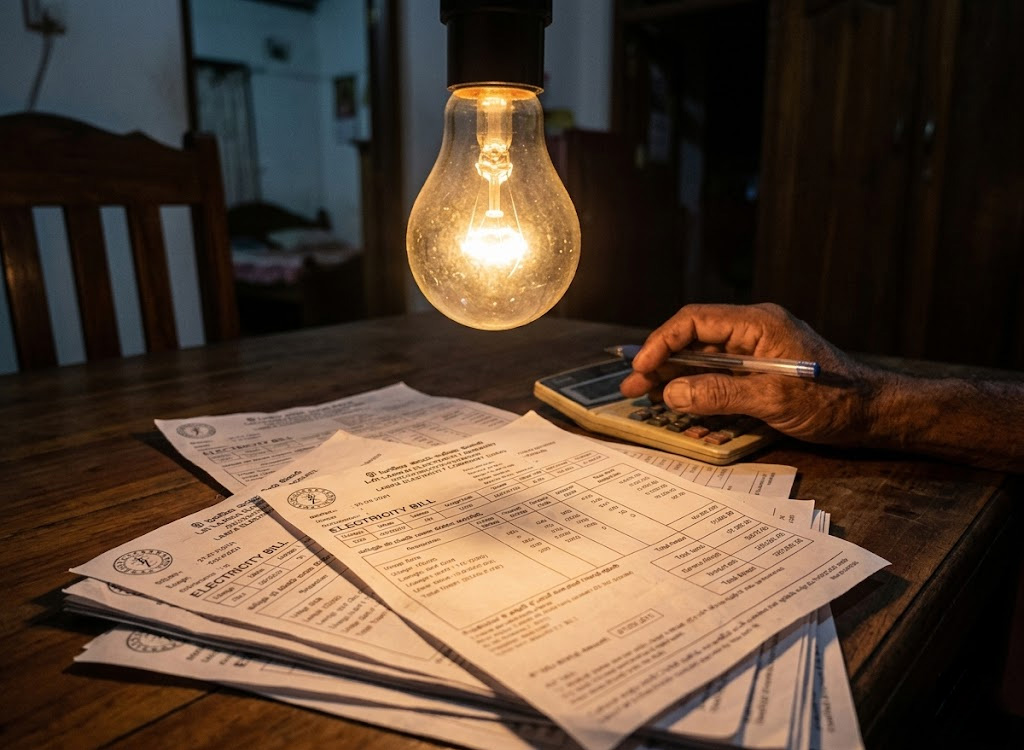
Sri Lankan households and businesses are facing renewed financial strain after electricity tariffs increased by a combined 43% so far this year, intensifying concerns over the country’s rising cost of living and fragile economic recovery.
The latest increase of 18% came into effect from Monday (11), following an earlier 25% tariff hike introduced earlier in the year. The cumulative rise has triggered growing public frustration, particularly among middle-income families and small businesses already struggling with inflation, higher taxes, and the continued depreciation of the rupee.
The government and energy authorities argue that the increases are necessary to maintain the financial stability of the power sector and meet conditions linked to Sri Lanka’s economic reform programme. Officials maintain that cost-reflective pricing is essential to reduce losses at the state-owned power utility and avoid a return to the unsustainable subsidy system that contributed to the country’s economic crisis.
However, for many consumers, the latest increase represents another blow to household finances at a time when wages and incomes have failed to keep pace with rising expenses.
Electricity bills have become one of the most politically sensitive issues in post-crisis Sri Lanka. During the height of the economic collapse in 2022, sharp increases in utility costs became symbolic of the wider burden carried by ordinary citizens under austerity measures and International Monetary Fund (IMF)-backed reforms. The latest tariff hikes risk reopening those frustrations.
Small and medium-sized businesses are among the hardest hit. Restaurant owners, manufacturers, retailers, and service providers warn that rising electricity costs are increasing operational expenses and forcing many businesses to either reduce profits or pass the burden onto consumers through higher prices.
Industry analysts caution that repeated tariff increases could have a broader inflationary effect across the economy. As electricity costs rise, transport services, food production, manufacturing, and commercial operations are all likely to become more expensive, adding pressure to already stretched household budgets.
Consumer groups and trade unions have also questioned whether the public is carrying a disproportionate share of the burden for inefficiencies within the energy sector. Critics argue that long-standing structural problems, mismanagement, and delays in energy sector reforms continue to affect the financial performance of the state power system.
The government, however, insists that difficult adjustments are unavoidable if Sri Lanka is to maintain economic stability and rebuild international confidence after the debt crisis. Authorities argue that artificially low electricity prices in previous years created large financial losses that ultimately became unsustainable for the state.
Political observers say the tariff increases may test public patience with the government’s broader economic recovery strategy. While macroeconomic indicators have shown signs of improvement, many Sri Lankans say they have yet to feel meaningful relief in their daily lives.
For households already coping with higher food prices, increased taxes, expensive fuel, and a weakening rupee, rising electricity costs are becoming another reminder that the country’s economic recovery remains uneven and deeply painful for large sections of the population.
As the government continues its reform agenda, the challenge will be balancing fiscal discipline with growing social pressure from citizens increasingly exhausted by the cost of recovery.










Leave a comment