
By The Pulseline News Desk
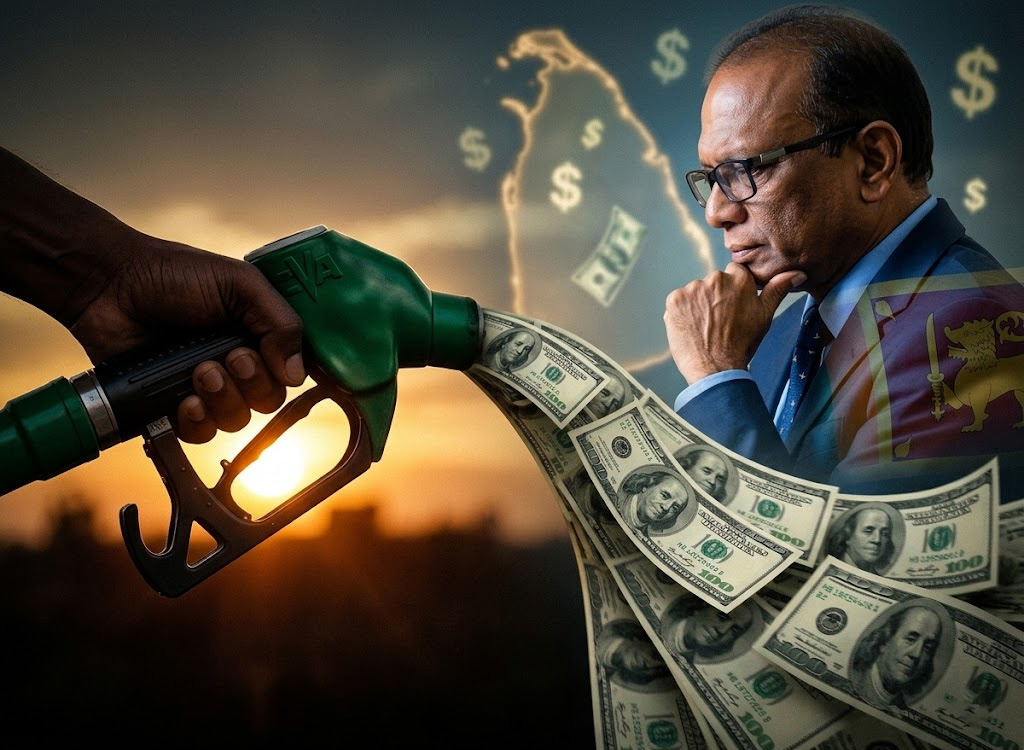
Sri Lanka’s latest fuel price increase is part of a broader strategy to curb the country’s mounting foreign exchange expenditure on fuel imports, according to Minister of Power, Ports and Civil Aviation Anura Karunathilaka.
Speaking at a media briefing following the launch of a billing digitisation initiative at the Ceylon Petroleum Storage Terminals Limited (CPSTL) in Kolonnawa, the minister said the government could no longer sustain the growing financial strain caused by fuel imports.
The minister revealed that Sri Lanka had spent approximately US$ 524 million on fuel imports by May, placing significant pressure on the country’s foreign exchange reserves. Faced with this challenge, policymakers determined that reducing fuel consumption had become essential to limiting the outflow of dollars and protecting the broader economy.
“Unless we reduce fuel consumption and the amount of foreign exchange leaving the country, the consequences will extend beyond higher fuel prices and could affect the entire economy,” he said.
Sharing the burden
Karunathilaka acknowledged that the price revision would place additional pressure on consumers but emphasised that the government was not transferring the full cost increase to the public.
According to the minister, the government’s approach involves distributing the burden among three parties: fuel consumers, the state, and fuel suppliers. While consumers will bear part of the increased cost through higher pump prices, the government continues to absorb a significant share, with suppliers also contributing.
The remarks come amid growing public concern over the rising cost of living and increasing transportation expenses. Fuel price adjustments often have a ripple effect throughout the economy, influencing the prices of goods and services across multiple sectors.
Lower prices than many countries
Defending the government’s decision, Karunathilaka noted that domestic fuel price increases remain comparatively moderate when measured against international trends.
He said that over recent months, prices have risen by 45.59 percent for Octane 95 petrol, 48.12 percent for Octane 92 petrol, 44.84 percent for diesel, and 45.29 percent for super diesel. Despite these increases, he argued that Sri Lanka’s adjustments remain lower than those seen in many other countries grappling with elevated global energy costs.
The minister also stated that fuel continues to be sold at a price that is approximately Rs. 25 below the normal retail cost, indicating that government support remains in place.
Limited impact on electricity costs
Addressing concerns about the possible impact on electricity prices, Karunathilaka said Sri Lanka’s energy strategy has increasingly focused on reducing dependence on diesel-powered electricity generation.
He explained that power generation plans are designed to minimize diesel usage wherever possible, limiting exposure to fluctuations in fuel prices. As a result, the latest fuel price increase is not expected to significantly affect electricity generation costs.
The balancing act
The government’s decision highlights the difficult balancing act facing Sri Lanka as it seeks to safeguard foreign exchange reserves while managing public expectations amid rising living costs. With fuel imports continuing to consume hundreds of millions of dollars, authorities appear determined to use pricing policy as a tool to moderate demand and reduce pressure on the country’s finances.
Whether consumers will accept higher fuel prices as part of that strategy remains to be seen, but officials insist that reducing fuel consumption is becoming an economic necessity rather than a policy choice.












Leave a comment