

By The Pulseline News Desk
Sri Lanka’s impressive fiscal performance in recent years has earned praise from the International Monetary Fund (IMF), but the global lender is warning that the country cannot rely indefinitely on windfall revenues from motor vehicle imports and related taxes to sustain public finances.
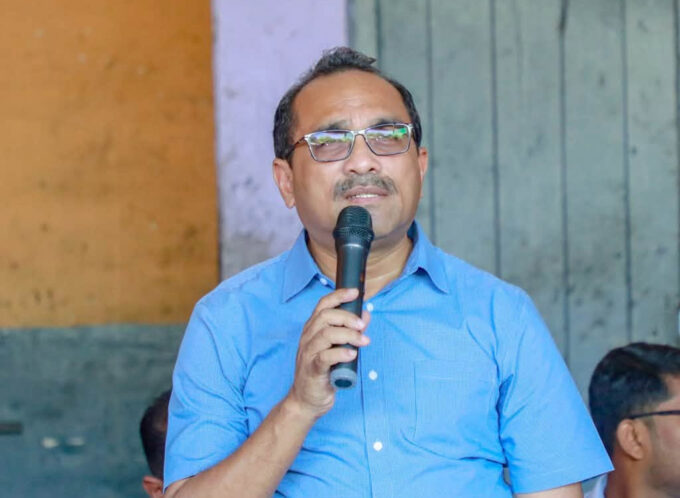
Speaking at a recent media briefing, IMF Mission Chief Evan Papageorgiou highlighted the government’s strong revenue performance in the past year while emphasizing the need for a more balanced and sustainable tax system.
The comments come at a crucial stage in the country’s economic recovery, as policymakers seek to consolidate fiscal gains achieved under the country’s reform programme while maintaining economic growth and social stability.
Strong revenue performance
According to the IMF, Sri Lanka significantly exceeded its fiscal targets last year, generating revenues well above expectations and creating much-needed fiscal space after years of economic turbulence.
Papageorgiou described the revenue outcome as exceptionally strong, noting that fiscal performance had surpassed targets for the primary budget surplus by a substantial margin.
The improvement reflects one of the most notable achievements of Sri Lanka’s economic stabilization efforts since the country emerged from its worst economic crisis in decades. Higher government revenues have helped strengthen public finances, improve debt sustainability prospects, and restore confidence among international lenders and investors.
The windfall factor
Despite welcoming the progress, the IMF cautioned that much of the revenue growth was driven by factors that may not be sustainable over the long term.
A significant portion of the government’s increased income came from motor vehicle import duties and other import-related taxes following the gradual reopening of imports. The resumption of vehicle imports generated a surge in customs revenues, providing an unexpected boost to government coffers.
In addition, the IMF noted that lower-than-planned spending on capital projects contributed to stronger fiscal outcomes by reducing overall government expenditure.
While these developments helped improve fiscal indicators, they also raise questions about the durability of revenue growth in the years ahead.
Economists point out that import-related tax collections can fluctuate considerably depending on exchange rates, consumer demand, government policy, and global economic conditions. As a result, relying heavily on such sources can expose public finances to sudden revenue shocks.
A wider tax net
The IMF’s central message is that Sri Lanka should focus on broadening its tax base rather than depending disproportionately on a few major revenue streams.
Papageorgiou stressed that an effective tax system should distribute the burden across a wide range of economic activities and taxpayers rather than concentrating heavily on specific categories such as vehicle imports, income taxes, or value-added tax (VAT).
The concept of a broader tax base generally involves expanding tax compliance, reducing exemptions, bringing more economic activity into the formal tax system, and improving tax administration. Such measures can generate more stable and predictable revenue while reducing pressure on any single group of taxpayers.
For Sri Lanka, this approach is particularly important as the government seeks to maintain fiscal discipline while supporting economic recovery.
Balancing revenue and growth
The debate over taxation remains politically sensitive. Businesses have frequently raised concerns about the impact of higher taxes on investment and competitiveness, while households continue to grapple with the rising cost of living following years of economic adjustment.
A broader tax system could potentially reduce the need for repeated increases in major taxes by spreading revenue collection more evenly across the economy. Supporters argue that this would create a fairer and more resilient fiscal framework.
However, achieving that objective will require continued reforms to improve tax administration, strengthen enforcement, reduce informality, and expand the number of registered taxpayers.
Next phase of fiscal reform
As Sri Lanka moves from economic stabilisation toward recovery and growth, the IMF’s message signals a shift in focus from short-term revenue gains to long-term fiscal sustainability.
The country’s recent success in exceeding revenue targets demonstrates the effectiveness of reforms implemented under the IMF-supported programme. Yet the challenge now is to ensure that government finances remain strong even after temporary revenue windfalls fade.
For policymakers, the task ahead is not simply to collect more taxes but to build a broader, more efficient, and more equitable tax system capable of supporting economic development without excessive dependence on any single source of revenue.
The IMF’s assessment suggests that the strength of Sri Lanka’s fiscal recovery will ultimately be measured not by one exceptional year of tax collection, but by its ability to create a stable revenue foundation that can endure through changing economic conditions.











Leave a comment