
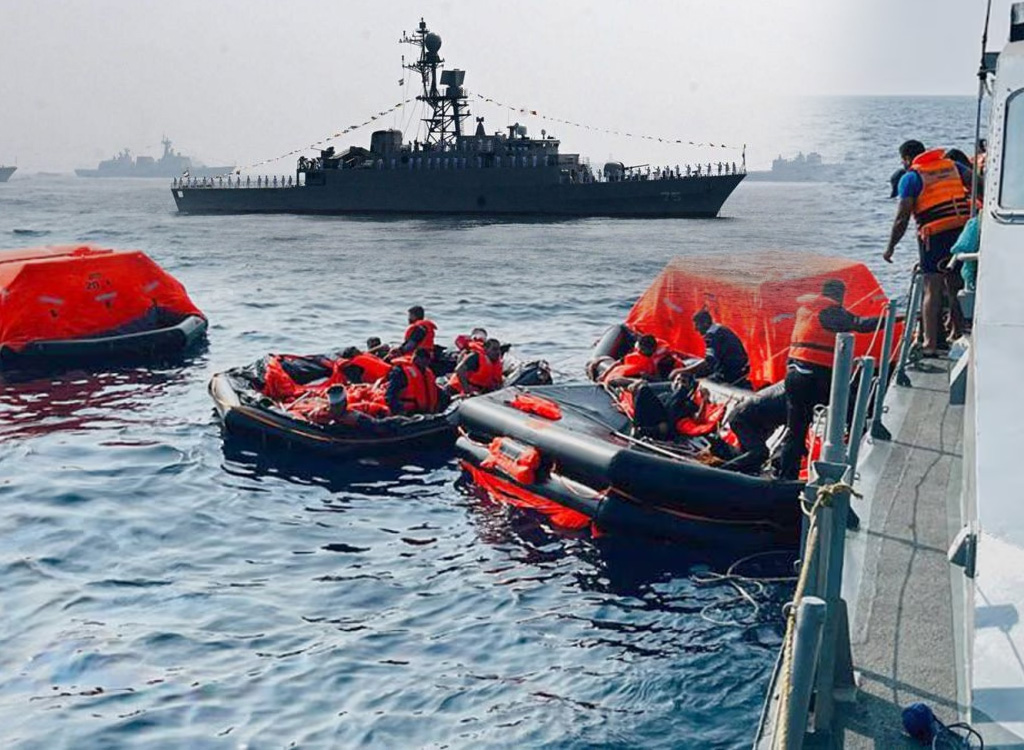
More than 240 Iranian naval personnel who had been temporarily sheltered in Sri Lanka have now departed the island, bringing closure to a sensitive humanitarian situation that unfolded against the backdrop of rising regional tensions in the Indian Ocean.
The sailors had been brought ashore in early March after a series of incidents nvolving Iranian naval vessels near Sri Lankan waters. Sri Lankan authorities stepped in on humanitarian grounds, providing shelter, medical assistance, and logistical support while carefully maintaining the country’s longstanding neutral foreign policy stance.
The incident was triggered when an Iranian warship, IRIS Dena, was reportedly destroyed in a military strike during heightened conflict involving the United States. Survivors from the vessel along with crew from another Iranian vessel – IRIS Bushehr – experiencing technical difficulties, were subsequently assisted by Sri Lankan naval forces.
Faced with a sudden influx of foreign military personnel, Sri Lanka coordinated closely with international partners while adhering to maritime conventions and humanitarian obligations. The sailors were accommodated at designated naval facilities under security and medical supervision, with officials emphasizing transparency and compliance with international law throughout the process.
After several weeks of diplomatic coordination, arrangements were finalized for the personnel to leave Sri Lanka. Their departure is believed to have been carried out in an orderly manner, likely involving repatriation efforts facilitated through official channels between Colombo and Tehran.
Analysts say the episode underscores Sri Lanka’s strategic position along key Indian Ocean shipping routes, where global maritime traffic frequently intersect. It also highlights the challenges smaller nations face in navigating complex geopolitical tensions while responding to immediate humanitarian needs.
Although Sri Lanka’s direct involvement has now ended, the broader implications of the incidents continue to resonate, particularly as regional security dynamics evolve and such incidents become increasingly entangled with global politics.










Leave a comment