
By The Pulseline News Desk
Sri Lanka is preparing to tighten Customs screening procedures and strengthen labour protections as it seeks to avoid proposed new U.S. tariffs that could impact billions of dollars in exports, according to government officials.
The measures come as Washington reviews trade practices in dozens of economies and considers imposing additional duties on countries it says have not done enough to prevent goods made with forced labour from entering global supply chains.
Deputy Minister of Finance Anil Jayantha Fernando said Sri Lanka already maintains robust labour laws and workplace protections but is taking additional steps to address concerns related to child labour and forced labour.
Among the planned reforms is the implementation of stricter Customs checks aimed at identifying imported goods produced through forced labour. The government also intends to fully adopt international labour standards, including the International Labour Organisation’s Convention 190 (C190), which Sri Lanka ratified in April. The convention establishes the right of all workers to be free from violence and harassment in the workplace.
“We already have a strong legal framework and labour practices,” Fernando has told Reuters, adding that the government is committed to eliminating any remaining concerns that could affect Sri Lanka’s trade relationships.
The move comes at a critical time for the island nation’s export sector. The U.S. remains Sri Lanka’s largest export destination, purchasing approximately $ 3 billion worth of goods annually, the majority of which are apparel products.
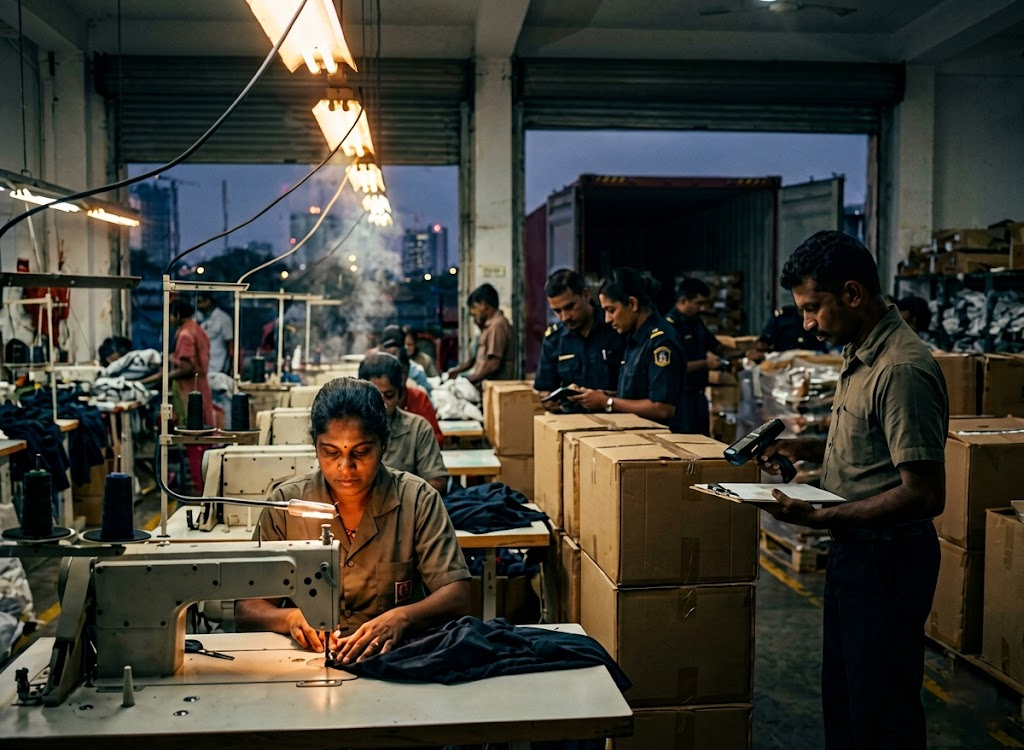
Sri Lanka’s garment industry, a key pillar of the economy, employs around 300,000 workers and generated roughly $ 5 billion in export earnings last year. However, the sector has faced headwinds in 2025, with apparel exports declining 7.4 percent to $ 1.53 billion during the first four months of the year.
Trade concerns have intensified following proposals by the Office of the United States Trade Representative (USTR) to impose new tariffs on imports from around 60 economies. Under the current proposal, Sri Lankan exports would face a 12.5 percent tariff rate – higher than those proposed for regional competitors Bangladesh and Pakistan, which would be subject to a 10 percent duty.
The USTR has also proposed a special textile mechanism that would allow limited quantities of apparel and textile imports to enter the U.S. market at reduced tariff rates.
According to the USTR, 54 economies failed to establish prohibitions on imports linked to forced labour, while six others – including Canada, Mexico, Pakistan, Indonesia, Ecuador and the European Union – were found to have inadequately enforced existing regulations.
U.S. Trade Representative Jamieson Greer defended the proposed measures, arguing that weak enforcement abroad places American workers at a disadvantage.
“Such failures create a dynamic where American workers are forced to compete globally on an uneven playing field,” Greer said, adding that the U.S. “will no longer tolerate this disparity.”
Public hearings on the proposed tariffs are scheduled for July 7, with written submissions due by July 6 and requests to testify required by June 22.
Fernando said discussions between Sri Lankan officials and the USTR are continuing, although Colombo has not yet decided to send a delegation to Washington as part of the consultation process.
For Sri Lanka, the outcome of the tariff review could have significant implications for its export-driven recovery efforts, particularly for the apparel sector, which remains one of the country’s largest sources of foreign exchange and employment.








Leave a comment