
By The Pulseline News Desk
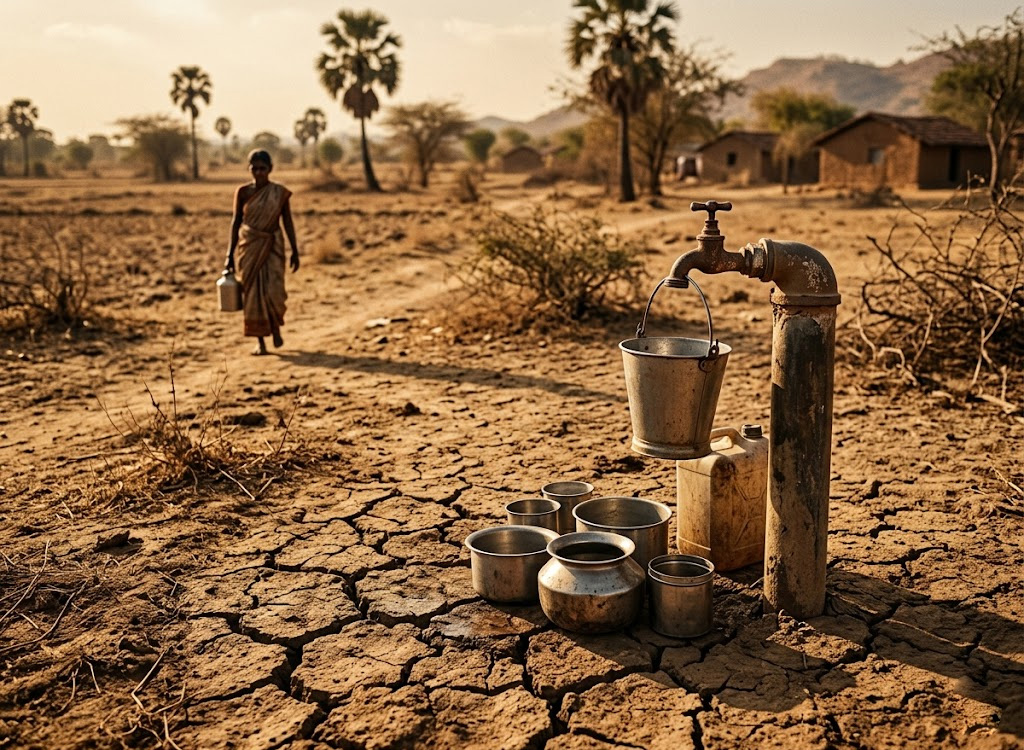
Sri Lanka may be forced to consider an extraordinary measure – purifying and distributing seawater for drinking purposes – if a forecasted El Niño event develops as anticipated and severely depletes the country’s freshwater resources.
The warning, issued by disaster management officials this week, highlights growing concerns over the potentially devastating impact of what could become one of the strongest El Niño episodes in a decade.
Speaking at a media briefing on Wednesday (10), Additional Secretary K.G.B. Dharmatilaka of the Disaster Management Centre (DMC) said authorities are preparing for a scenario in which prolonged drought conditions could place unprecedented pressure on the nation’s water supply systems.
“The expected El Niño condition could be severe and may result in the drying up of major water sources,” he warned, adding that existing emergency resources may not be sufficient if the drought intensifies.
A growing threat to water security
Sri Lanka’s water security largely depends on seasonal rainfall, reservoirs and river systems that support both domestic consumption and agriculture. However, meteorological forecasts suggest rainfall could decline significantly during the coming months as El Niño conditions strengthen.
Officials say the country could face drought conditions during July and August, creating challenges for drinking water supply, irrigation and food production.
The National Disaster Services Centre currently maintains a limited fleet of water bowsers for emergency distribution. However, Dharmatilaka has cautioned that these resources may prove inadequate if large areas of the country experience prolonged water shortages.
In a stark assessment of the possible consequences, he has said authorities may ultimately have to explore the purification and distribution of seawater to meet essential drinking water needs.
Global warning signs
The concerns are not limited to Sri Lanka.
The United Nations’ meteorological authorities have already warned of the possibility of the strongest El Niño event in 10 years, raising fears of widespread climatic disruptions across several regions of the world.
El Niño is a naturally occurring climate phenomenon caused by unusually warm sea surface temperatures in the central and eastern Pacific Ocean. Although it originates thousands of kilometres away, its effects ripple across the globe, altering rainfall patterns, temperatures and weather systems.
For countries such as Sri Lanka, India and Australia, El Niño often brings below-average rainfall and heightened drought risks.
Agriculture at risk
One of the sectors most vulnerable to a prolonged dry spell is agriculture.
Reduced rainfall can significantly affect paddy cultivation, vegetable farming and livestock production, threatening both rural livelihoods and food security. Lower water availability may also affect hydroelectric power generation and increase pressure on already stretched water management systems.
Agricultural experts have repeatedly stressed the importance of early planning to minimise crop losses and ensure efficient use of available water resources.
Extreme weather could follow
Ironically, the dry conditions associated with El Niño may later give way to severe rainfall events.
Meteorological officials have indicated that rainfall could increase substantially during October and November, potentially bringing heavy downpours, strong winds and even tornado-like weather conditions in some areas.
The country may therefore face a cycle of climate extremes – drought during the middle of the year followed by intense rainfall and flooding risks later in the season.
Officials also forecast warmer-than-normal conditions from January to April next year, further underscoring the long-term impact of the climate anomaly.
Preparing for an uncertain future
Disaster management authorities say preparedness will be critical in the months ahead. Water conservation, improved reservoir management, contingency planning and public awareness campaigns are likely to play a crucial role in mitigating the effects of any prolonged drought.
The prospect of having to purify seawater for drinking purposes remains a worst-case scenario. Nevertheless, the warning reflects the seriousness with which authorities are viewing the potential threat.
As climate variability continues to intensify around the world, Sri Lanka’s experience serves as a reminder that weather-related disasters are no longer isolated events but increasingly complex challenges that demand long-term planning and resilience.











Leave a comment