
By The Pulseline News Desk
A renewed debate over the state of Sri Lanka’s economy has emerged after economist Steve H. Hanke claimed the country has “never recovered” from its recent financial crisis, despite official data pointing to a gradual rebound.
In a post on X, Hanke argued that Sri Lanka’s economic trajectory has remained weak since the crisis that unfolded between 2019 and 2022, culminating in a sovereign default and a bailout programme backed by the International Monetary Fund. He further asserted that prior to the crisis, Sri Lanka’s growth path had been broadly comparable to regional peers such as India.
Crisis and intervention
Sri Lanka’s economic collapse marked one of the most severe downturns in its history, driven by dwindling foreign reserves, mounting debt, and policy missteps. By 2022, the country faced acute shortages of fuel, food, and medicine, alongside spiraling inflation.
The government turned to the IMF for assistance, securing a multi-billion-dollar programme conditioned on fiscal consolidation, tax reforms, and debt restructuring. These measures were aimed at restoring macroeconomic stability and rebuilding investor confidence.
Signs of stabilisation
Since then, official indicators suggest the economy has begun to stabilise. Inflation, which surged to historic highs during the crisis, has eased significantly, while foreign exchange reserves have improved. Economic growth has also returned after a period of contraction.
The International Monetary Fund (IMF) has described Sri Lanka’s reform progress as “commendable,” noting that policy adjustments have helped bring inflation under control and support a modest recovery.
A gap between data and reality
However, Hanke’s remarks highlight a persistent disconnect between macroeconomic indicators and the lived experience of many Sri Lankans. Critics argue that while headline figures show improvement, the benefits have yet to reach large segments of the population.
Higher taxes, reduced subsidies, and a rising cost of living have placed continued strain on households. Poverty levels remain elevated compared to pre-crisis conditions, and public debt continues to weigh heavily on the economy.
Competing narratives
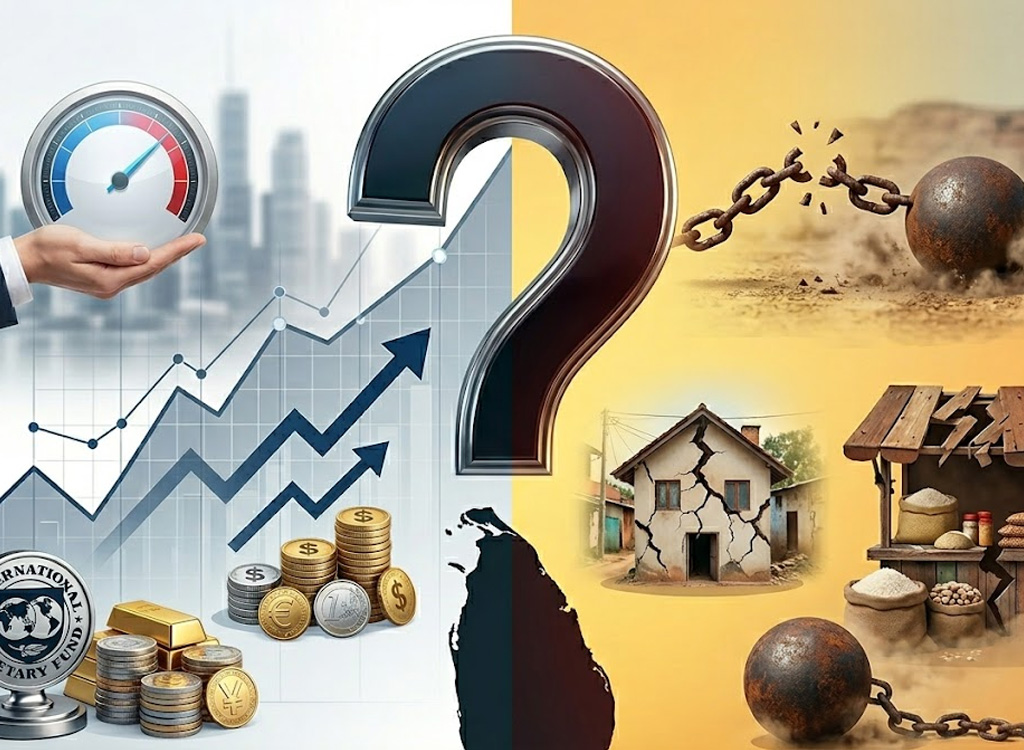
The disagreement underscores two competing interpretations of recovery. On one hand, institutions like the IMF point to stabilising indicators as evidence that reforms are working. On the other, critics argue that true recovery should be measured by improvements in living standards and long-term growth prospects.
Uncertain path ahead
Sri Lanka’s economic outlook remains cautiously optimistic but fragile. Continued reform implementation, debt restructuring, and external support will be critical in sustaining progress.
Whether the country can transition from stabilization to a broad-based recovery – one that is felt across society – remains an open question.






Leave a comment