
By Dr. Jehan Perera
It was unfortunate the Government felt itself obliged to postpone the planned Grade Six educational reforms for a year. The manner in which they were responding to the furore over the Grade 6 English Reader, in which a weblink to a gay dating site was inserted, was careful. Government leaders have taken pains to explain the mishap and reassure everyone concerned that it was not meant to be there and that it would be removed. They have been meeting religious prelates, educationists and community leaders. In a context where public trust in institutions was badly eroded over many years, such responsiveness matters, even though the choice forced upon the Government may not have been the best. It signals the Government sees itself as accountable to society, including to parents, teachers, and those concerned about the values transmitted through the school system.
This incident also appears to have strengthened unity within the Government. The attempt by some Opposition politicians and gender misogynists to pin responsibility for this lapse on Education Minister and Prime Minister Dr. Harini Amarasuriya, has prompted other senior members of the Government to come to her defense. This is contrary to speculation the powerful Janatha Vimukthi Peramuna component of the Government is unhappy with the Premier. They have shown the envisaged educational reforms were positive and were derailed because of irresponsible opposition. It also demonstrates an understanding within the Government that individual Ministers should not be scapegoated for systemic shortcomings. Effective governance depends on collective responsibility and solidarity within the leadership, especially during moments of public controversy.
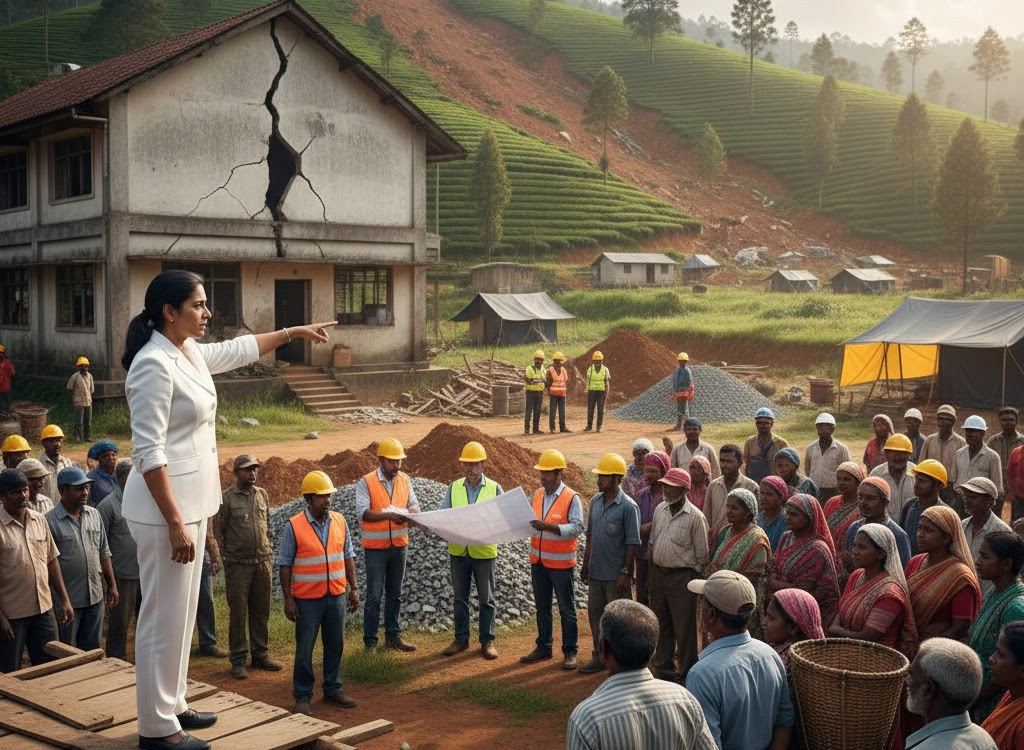
The continuing important role of the Prime Minister in the Government is evident in her meetings with international dignitaries and also in addressing the general public. Last week, she chaired the inaugural meeting of the Presidential Task Force to Rebuild Sri Lanka in the aftermath of Cyclone Ditwah. The composition of the Task Force once again reflects the responsiveness of the Government to public opinion. Unlike previous mechanisms set up by Governments, which were either all male or without ethnic minority representation, this one includes both, and also includes civil society representation. Decision-making bodies in which there is diversity are more likely to command public legitimacy.
Task Force
The Task Force overlooks eight committees to manage different aspects of the recovery, each headed by a sector Minister. These committees will focus on needs assessment, the restoration of public infrastructure, housing, local economies and livelihoods, social infrastructure, finance and funding, data and information systems, and public communication. This structure appears comprehensive and well designed. However, experience from post-disaster reconstruction in countries such as Indonesia and Sri Lanka after the 2004 tsunami suggests that institutional design alone does not guarantee success. What matters equally is how far these committees engage with those on the ground and remain open to feedback that may complicate, slow down, or even challenge initial plans.
An option the Task Force might wish to consider is to develop a linkage with civil society groups with expertise in the areas that the Task Force is expected to work. The Civil Society Organisations Collective for Emergency Relief has set up several committees that could be linked to the committees supervised by the Task Force. Such linkages would not weaken the Government’s authority but strengthen it by grounding policy in lived realities. Recent findings emphasise the idea of ‘co-production’, where the state and society jointly shape solutions in which sustainable outcomes often emerge when communities are treated not as passive beneficiaries but as partners in problem-solving.
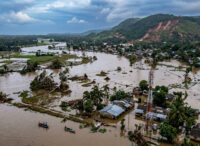
Ditwah destroyed more than physical infrastructure. It also destroyed communities. Some were swallowed by landslides and floods, while many others will need to be moved from their homes as they live in areas vulnerable to future disasters. The trauma of displacement is not merely material but social and psychological. Moving communities to new locations requires careful planning. It is not simply a matter of providing people with houses. They need to be relocated to locations and in a manner that permits communities to live together and to have livelihoods. This will require consultation with those who are displaced. Post-disaster evaluations have acknowledged that relocation schemes imposed without community consent often fail, leading to the abandonment of new settlements or the emergence of new forms of marginalisation. Even today, abandoned tsunami housing is to be seen in various places that were affected by the 2004 tsunami.
Malaiyaha Tamils
The large-scale reconstruction that needs to take place in parts of the country most severely affected by Ditwah also brings an opportunity to deal with the special problems of the Malaiyaha Tamil population. These are people of recent Indian origin who were unjustly treated at the time of Independence and denied rights of citizenship such as land ownership and the vote. This has been a festering problem and a blot on the conscience of the country. The need to resettle people living in those parts of the Hill Country which are vulnerable to landslides is an opportunity to do justice by the Malaiyaha Tamil community. Technocratic solutions such as high-rise apartments or English-style townhouses that have or are being contemplated may be cost-effective, but may also be culturally inappropriate and socially disruptive. The task is not simply to build houses but to rebuild communities.
The resettlement of people who have lost their homes and communities requires consultation with them, in the same manner that the education reform programme of which the textbook controversy is only a small part, too needs to be discussed with concerned stakeholders including school teachers and university faculty. Opening up for discussion does not mean giving up one’s own position or values. Rather, it means recognising that better solutions emerge when different perspectives are heard and negotiated. Consultation takes time and can be frustrating, particularly in contexts of crisis where pressure for quick results is intense. However, solutions developed with stakeholder participation are more resilient and less costly in the long run.
Rebuilding after Ditwah, addressing historical injustices faced by the Malaiyaha Tamil community, advancing education reform, changing the electoral system to hold Provincial Elections without further delay and other challenges facing the Government, including national reconciliation, all require dialogue across differences and patience with disagreement. Opening up for discussion is not to give up on one’s own position or values, but to listen, learn, and arrive at solutions that have wider acceptance. Consultation needs to be treated as an investment in sustainability and legitimacy and not as an obstacle to rapid decision making. Addressing the problems together, especially engagement with the affected parties and those who work with them, offers the best chance of rebuilding not only the physical infrastructure but also trust between the Government and the people in the year ahead.
(The writer is the Executive Director of the National Peace Council organization)
Source: The Morning
Disclaimer: The views and opinions expressed in this column are those of the author, and do not necessarily reflect those of this publication.









Leave a comment