
By The Pulseline News Desk
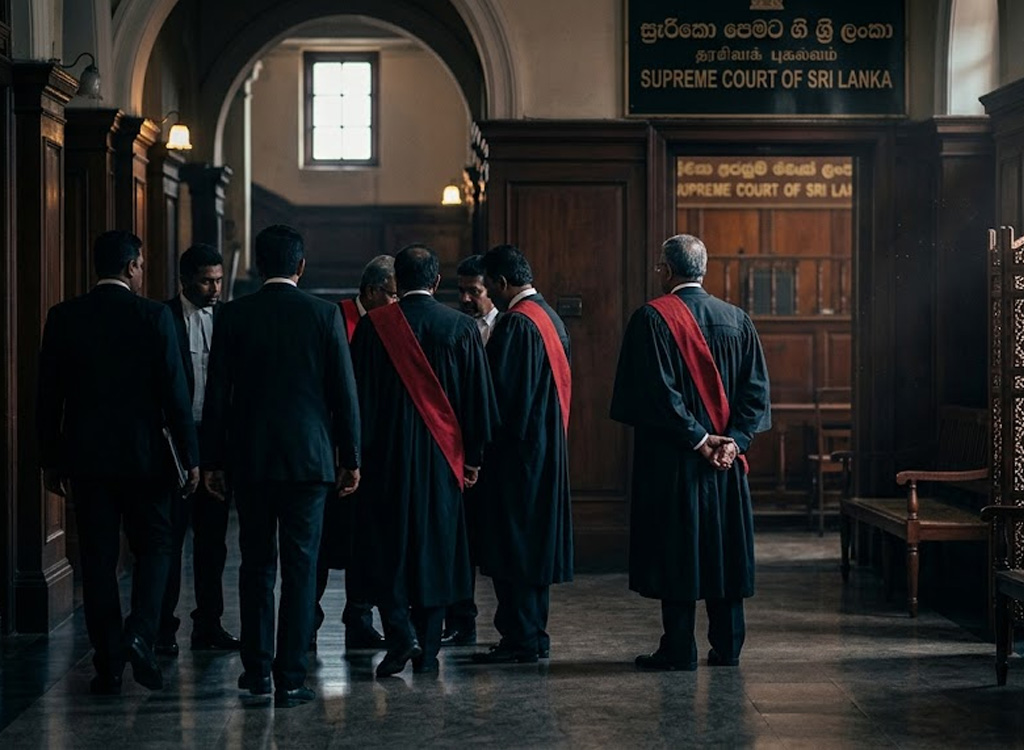
A Government proposal to extend the retirement age of judges has ignited one of the strongest institutional pushbacks from Sri Lanka’s legal fraternity in recent years, with both the Judicial Service Association of Sri Lanka (JSASL) and the Bar Association of Sri Lanka (BASL) warning that the move could undermine judicial independence and set a dangerous constitutional precedent.
What has been presented by its proponents as an administrative solution to address mounting court delays has rapidly evolved into a broader debate over the separation of powers, constitutional governance, and the future independence of the judiciary.
At the centre of the controversy is a proposal expected to be placed before Cabinet by Justice and National Integration Minister Harshana Nanayakkara to amend the Constitution and increase the retirement age of Supreme Court and Court of Appeal judges by two years, while similarly extending the retirement age of lower court judges.
The Government has argued that retaining experienced judges for a longer period would help ease Sri Lanka’s chronic backlog of court cases, which has exceeded one million pending matters across the judicial system.
However, the country’s judicial officers themselves have overwhelmingly rejected that justification.
Unanimous opposition
In a detailed letter dated July 22 addressed to the Justice Minister, the JSASL – representing District Judges and Magistrates – said its membership had unanimously resolved to oppose any extension of the retirement age for judges, including those serving on the superior courts.
The Association warned that the proposal would affect judicial independence, obstruct career progression within the judiciary, and ultimately erode public confidence in the administration of justice.
More fundamentally, it argued that simply extending judges’ tenure would do little to address the structural causes of legal delays.
The Association noted that delays stem from longstanding procedural inefficiencies, shortages of judicial officers, inadequate resources, and outdated court processes rather than the retirement of experienced judges.
Consequently, it maintained that increasing the retirement age would merely postpone vacancies without delivering meaningful improvements to case disposal rates.
Constitutional concerns
The controversy extends beyond administrative efficiency.
The retirement age of superior court judges is entrenched within the constitutional chapter safeguarding judicial independence alongside provisions governing judicial appointments, removal, salaries and pensions.
For that reason, any alteration requires a constitutional amendment.
Critics argue that constitutional provisions protecting judicial independence should not be amended through a process lacking broad consultation with the judiciary, the legal profession and the public.
The JSASL has questioned why such a significant constitutional reform has proceeded without formal engagement with stakeholders, warning that constitutional amendments affecting judicial institutions require transparency rather than confidential discussions within the Executive.
The Association cautioned that changing retirement ages while judges remain in office could create perceptions that governments possess the ability to shape the composition of the superior judiciary according to political preferences.
Precedent for future governments
Perhaps the most significant concern raised by opponents is the precedent the amendment could establish.
If one government can extend the tenure of sitting judges through constitutional amendment, future administrations could equally reduce retirement ages or alter judicial tenure depending on political convenience.
Legal observers note that while the current proposal extends service by two years, future governments could potentially introduce further extensions or even reductions, creating uncertainty surrounding judicial tenure.
The JSASL argued that judicial independence forms part of the sovereignty of the people and should remain insulated from short-term political considerations regardless of which administration holds office.
The Association also warned that judges themselves had never sought such an amendment, suggesting that imposing it without their support risks creating unnecessary controversy around an institution whose legitimacy depends heavily on public confidence.
Historical parallels
The debate has inevitably revived memories of Sri Lanka’s long history of controversial constitutional amendments.
Opponents point to previous amendments – including the First Amendment relating to the civic rights of former Prime Minister Sirimavo Bandaranaike, the Fourth Amendment extending the life of Parliament, and the 18th and 20th Amendments expanding presidential powers – as examples where constitutional reforms introduced for immediate political objectives later attracted sustained criticism.
For critics, the current proposal risks joining that list if it is perceived as altering constitutional safeguards without adequate consultation or consensus.
Some legal commentators have gone further, warning that any Executive initiative affecting judicial tenure carries the potential to be interpreted as interference with judicial independence, regardless of the stated objective.
BASL enters the debate
The legal profession is also preparing to formally intervene.
The BASL has convened a Special General Meeting for Wednesday (29) under Article 12A of its Constitution to determine its official position on the proposed amendment.
The meeting will consider not only the retirement age proposal but also the JSASL’s opposition and growing concern over the Executive’s continued delay in filling four vacancies in the Supreme Court and Court of Appeal.
The issue of unfilled vacancies has itself become a point of contention, with many lawyers arguing that existing judicial shortages could be addressed more effectively through timely appointments rather than extending the tenure of sitting judges.
The BASL’s deliberations are expected to provide the strongest indication yet of whether Sri Lanka’s wider legal community intends to collectively oppose the proposed constitutional amendment.
Beyond retirement
The dispute ultimately extends beyond the age at which judges leave office.
It has reopened fundamental questions about how constitutional changes affecting independent institutions should be made, the extent of Executive influence over the judiciary, and whether institutional reforms should be driven by administrative necessity or constitutional principle.
While the Government maintains that the proposal is intended to improve judicial efficiency, the unusually united response from both serving judicial officers and the organised legal profession suggests the debate has become one about preserving institutional independence rather than simply extending judicial careers.
As Cabinet considers the proposal and the legal community prepares for what could become a defining confrontation, the retirement age of judges has emerged as a test of the Government’s approach to constitutional reform — and of the delicate balance between improving the efficiency of the courts and preserving their independence.












Leave a comment