

By The Pulseline News Desk
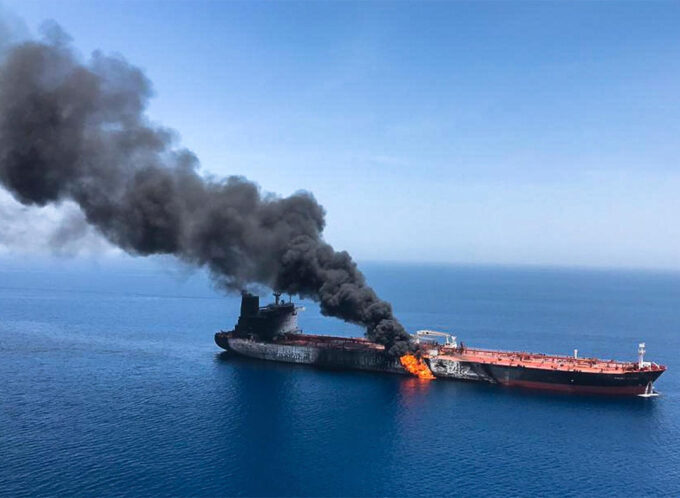
A new maritime security incident is unfolding in one of the world’s most volatile shipping corridors, after an oil tanker was hijacked off the coast of Yemen and reportedly redirected toward Somalia. The incident has once again drawn attention to the fragile security environment in the waters linking the Arabian Peninsula to the Horn of Africa, an area long vulnerable to piracy, conflict spillover, and geopolitical tension.
Initial reports indicate that the vessel was seized in or near the Gulf of Aden, a critical chokepoint connecting the Red Sea to the wider Indian Ocean. The region has historically been a hotspot for maritime threats, particularly during the height of Somali piracy in the late 2000s and early 2010s. While international naval patrols significantly reduced such incidents over the past decade, the latest hijacking suggests that underlying risks have not fully disappeared.
The proximity of the attack to Yemen adds another layer of complexity. The country has been engulfed in conflict since the outbreak of the Yemeni Civil War, creating conditions that have allowed armed groups to operate with relative impunity along parts of its coastline. This instability has, at times, spilled into adjacent maritime zones, threatening commercial shipping routes that carry a significant share of global oil supplies.
The reported movement of the tanker toward Somalia raises the possibility that the hijacking could be linked to piracy networks rather than purely conflict-driven actors. Somali piracy, though greatly diminished in recent years, has never been entirely eradicated. Economic hardship, weak governance, and limited coastal enforcement capacity continue to provide conditions for its re-emergence, particularly when global attention shifts elsewhere.
For the shipping industry, the incident is likely to reignite concerns over route security and insurance costs. Vessels transiting the region may face renewed advisories to adopt heightened security measures, including rerouting, increased onboard protection, or coordination with international naval forces. Even isolated incidents can have disproportionate economic consequences, given the strategic importance of the corridor for energy shipments and global trade.
International response will be closely watched. Multinational naval coalitions have previously played a crucial role in suppressing piracy in these waters, but their current focus is divided among multiple global challenges. A sustained increase in such attacks could prompt a shift in maritime security priorities, particularly if commercial shipping comes under repeated threat.
Beyond immediate security concerns, the hijacking underscores a broader pattern: maritime spaces adjacent to conflict zones often become extensions of instability on land. As long as governance gaps persist in places like Yemen and Somalia, the risk of similar incidents will remain.
For now, key questions remain unanswered about the identity of the hijackers, the status of the crew, and the intentions behind the seizure. Whether this proves to be an isolated incident or the start of a wider trend will depend on developments in the coming days.
What is clear, however, is that the episode has once again exposed the vulnerability of one of the world’s most important maritime routes, reminding global stakeholders that even periods of relative stability can quickly give way to renewed insecurity at sea.











Leave a comment