
By The Pulseline News Desk
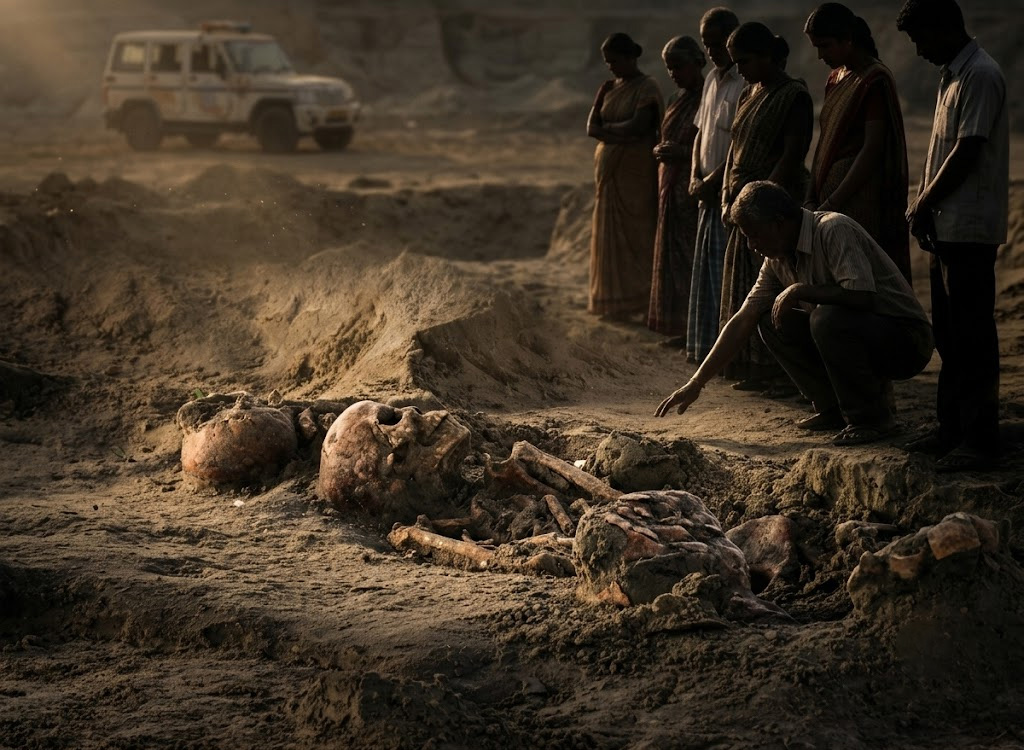
Nearly three decades after allegations first emerged of a mass burial site in Chemmani, Jaffna, families of the disappeared are still searching, not only for the remains of their loved ones, but also for truth, accountability and justice.
A new report by the International Truth and Justice Project (ITJP), titled Chemmani Mass Grave: “We Are Still Searching”, argues that the site has become a powerful symbol of Sri Lanka’s long-standing failure to investigate enforced disappearances, prosecute those responsible and provide answers to thousands of families affected by the country’s civil conflict.
The report contends that Chemmani is no longer simply a matter of forensic investigation. Rather, it says, the available evidence should support renewed criminal investigations into allegations of enforced disappearances, unlawful killings and other serious violations committed during the war.
A search that has never ended
For families of the disappeared, the passage of time has not diminished hope or grief.
“I would be shattered if the remains of my son were found buried at Chemmani, and I would be shattered if they were not,” said Paramanathan Selvaraja, whose son disappeared in 1999.
“The only way I can be happy is if my son returns to me alive.”
His words capture the uncertainty that continues to define the lives of thousands of Sri Lankan families who have spent decades searching for relatives who vanished during the conflict. For many, the absence of certainty has prolonged the trauma, leaving them suspended between hope and mourning.
The title of the ITJP report reflects that reality. “We are still searching” echoes a sentiment repeatedly expressed by relatives who have yet to learn what happened to their loved ones.
More than a forensic site
According to the report, Chemmani has become the largest known mass grave site in Sri Lanka, distinguished not only by its scale but also by what the organisation describes as years of alleged concealment and the volume of evidence connecting the site to wartime abuses.
Drawing on witness testimony collected over decades, court records, military information, contemporaneous documents and previous investigations, the report argues that the site should now be treated as potential evidence in criminal proceedings rather than solely as an archaeological or forensic investigation.
The ITJP says a prima facie case exists for investigations into enforced disappearances, unlawful killings and related international crimes, maintaining that the principal obstacle has not been a lack of evidence but the absence of sustained political and institutional commitment to accountability.
Questions of accountability
One of the report’s central findings is that no mid-ranking or senior military commander has been held criminally accountable for violations allegedly linked to Chemmani.
Instead, it notes that several officers who served in the area during the relevant period later received promotions and assumed positions of greater responsibility.
An annex to the report identifies seven army officers named as alleged suspects. The report further states that two of those officers were later deployed as United Nations peacekeepers in Haiti during a period when Sri Lankan personnel faced allegations of widespread sexual exploitation and abuse of children.
It also notes that other officers were subsequently associated with separate allegations involving the abduction, torture and killing of journalists.
The report does not present these incidents as the same case but argues that, collectively, they illustrate how unresolved allegations and weak accountability mechanisms can contribute to recurring patterns of abuse and erode public confidence in state institutions.
Government response
During a visit to the Chemmani excavation site in June this year, Minister of Justice and National Integration Harshana Nanayakkara said the Government lacked information about events that occurred in 1998 and suggested that families of the disappeared should identify those responsible.
The ITJP challenges that position, arguing that the state bears the legal responsibility to investigate enforced disappearances and establish the truth, rather than placing that burden on victims’ families.
An ongoing obligation
Under international human rights law, enforced disappearance is regarded as a continuing violation until the fate and whereabouts of the missing person are established.
For that reason, the report argues that Chemmani cannot be viewed simply as a historical chapter of Sri Lanka’s civil war. Instead, it remains a contemporary test of the country’s willingness to fulfil its obligations regarding truth, justice and accountability.
Even if human remains are recovered and identified, the report says, meaningful justice requires independent criminal investigations, accountability where evidence supports prosecution and effective remedies for victims and their families.
Beyond the excavation
The ongoing excavations at Chemmani represent more than the recovery of human remains. They have reopened long-standing questions about wartime accountability, the effectiveness of investigative institutions and the rights of families who have waited decades for answers.
For relatives of the disappeared, every discovery carries both hope and anguish. A confirmed identification may finally answer years of uncertainty, yet it also confirms an irreversible loss. For others, the absence of evidence prolongs an agonising search.
As investigations continue, Chemmani has become more than a burial site. It stands as a measure of whether Sri Lanka can confront one of the most painful chapters of its past through credible investigations, transparent institutions and a commitment to justice that extends beyond promises to meaningful action.









Leave a comment